
EWAP Resilience
Farmer-Led Climate Adaptation Through Healthier Soils and Resilient Agricultural Systems in Africa
Project status: In development | Seeking funding and strategic partnerships
Geographic focus: Ghana, Uganda, Tanzania and Ethiopia
Focus areas: Climate Adaptation | Soil Health | Sustainable Agriculture | Farmer Livelihoods | Climate Finance

Why EWAP Resilience?
Climate adaptation in agriculture requires more than identifying promising technologies. Solutions must also be affordable, accessible, environmentally appropriate and responsive to farmers' needs.
Across African farming systems, important questions remain about which soil management interventions can strengthen resilience under changing climatic conditions, how farmers can participate in their development, and what financial and institutional arrangements are needed to support wider adoption.
EWAP Resilience seeks to address these questions through an interdisciplinary, locally grounded approach.
The programme is guided by a central principle:
Farmers should not simply be recipients of climate solutions. They should help shape the solutions intended to support their livelihoods.
By connecting scientific research with farmer experiences, institutional partnerships and policy engagement, EWAP Resilience seeks to support adaptation pathways that are both environmentally effective and socially equitable.
What We Aim to Achieve
EWAP Resilience is being developed around five interconnected objectives:
1. Strengthen climate-resilient agricultural systems
Explore how improved soil management, sustainable agricultural practices and locally appropriate nature-based interventions can support crop productivity, soil health and resilience to climate-related stresses.
2. Advance farmer-led adaptation
Place farmers' knowledge, priorities and experiences at the centre of research design, adaptation planning and decision-making, with particular attention to smallholder participation and locally appropriate implementation.
3. Investigate the role of enhanced rock weathering
Assess the opportunities, limitations and conditions under which enhanced rock weathering and related soil amendments could contribute to healthier soils, agricultural productivity and climate-resilient farming.
4. Strengthen African research and institutional capacity
Support collaboration between African research institutions, universities, farming communities, policymakers and international partners to generate locally relevant evidence and strengthen long-term research capabilities.
5. Explore equitable financing and policy pathways
Investigate the financial, institutional and governance arrangements that could make agricultural adaptation interventions more accessible, including opportunities for adaptation finance, investment partnerships and fair benefit-sharing.

Our Geographic Focus
EWAP Resilience is initially being developed around four African countries, drawing on EWAP's existing research relationships and country-level engagement.
Ghana
Building on ongoing engagement with agricultural research institutions and EWAP's Ghana technical and policy work, the programme seeks to explore opportunities for soil-health interventions, farmer participation and climate-resilient crop production.
Uganda
Drawing on collaborations with agricultural researchers and institutions, the programme seeks to examine climate adaptation opportunities within agricultural systems, connecting soil management, research evidence and farmer livelihoods.
Tanzania
Through existing scientific and institutional relationships, the programme seeks to explore locally relevant soil-health and agricultural adaptation approaches, alongside opportunities for research collaboration and knowledge exchange.
Ethiopia
Building on engagement with agricultural research partners, the programme seeks to investigate how soil management, adaptation research and institutional collaboration could contribute to resilient agricultural systems.
The four-country approach offers opportunities for comparative learning while recognising that agricultural conditions, adaptation priorities and institutional arrangements differ across countries.
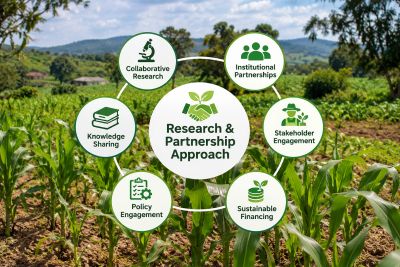
Research and Partnership Approach
EWAP Resilience is designed around collaboration between African research institutions and international expertise.
The programme is being developed through EWAP's existing relationships with institutions including CSIR-Crops Research Institute and CSIR-Soil Research Institute in Ghana; the National Agricultural Research Organisation and Makerere University in Uganda; the Nelson Mandela African Institution of Science and Technology in Tanzania; and the Ethiopian Institute of Agricultural Research and International Crops Research Institute for Semi-Arid Tropics (ICRISAT) Ethiopia.
The University of Exeter is supporting the development of the proposed research collaboration, with international academic engagement involving Adelaide University and Robert Gordon University.
Specific institutional roles and project commitments will be confirmed as the programme develops.
The proposed approach combines scientific investigation with stakeholder participation, policy engagement, knowledge-sharing and exploration of sustainable financing models.
Rather than developing a single intervention for replication across all settings, EWAP Resilience seeks to understand what works, where, for whom and under what conditions.
Potential Impact
EWAP Resilience aims to contribute to several interconnected outcomes:
- For farmers: Better evidence on practical soil-health and agricultural adaptation options, with stronger opportunities to influence research and implementation decisions.
- For researchers: Opportunities for interdisciplinary collaboration, comparative research, knowledge exchange and capacity development.
- For policymakers: Locally relevant evidence to inform agricultural adaptation strategies, climate resilience planning and sustainable land management.
- For funders and development partners: A collaborative research and implementation pathway through which investments in agricultural adaptation can be informed by evidence, local participation and institutional partnerships.
- For African research institutions: Stronger opportunities to lead, shape and contribute to research addressing national and regional adaptation priorities.
These are intended outcomes that will depend on the programme's eventual design, resources and implementation.
Opportunities for Collaboration and Investment
EWAP Resilience is currently seeking funding and strategic partnerships to advance programme development and future implementation.
We welcome engagement from organisations and individuals working in:
- Climate adaptation and ecosystem-based adaptation
- Agricultural research, soil health and sustainable land management
- Smallholder farming and rural livelihoods
- Climate finance, development finance and philanthropic investment
- Government policy, national climate planning and agricultural development
- Monitoring, evaluation, research and knowledge exchange
There are opportunities to contribute at different stages of the programme.
Financial support can enable research activities, field investigations, stakeholder engagement, institutional capacity development and implementation.
Equally, technical expertise, research collaboration, knowledge-sharing, policy engagement and strategic partnerships can contribute to advancing the programme while funding is being pursued.
EWAP welcomes conversations with organisations interested in exploring how EWAP Resilience could complement existing agricultural adaptation programmes, national priorities and climate investment initiatives.
Related EWAP Initiatives
EWAP Pilot Framework

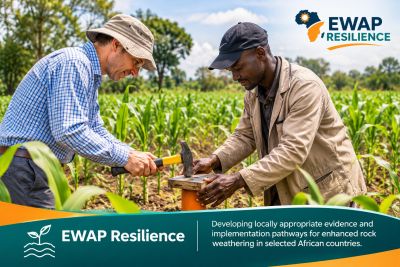
Developing locally appropriate evidence and implementation pathways for enhanced rock weathering in selected African countries.
ROCKS-AFRICA
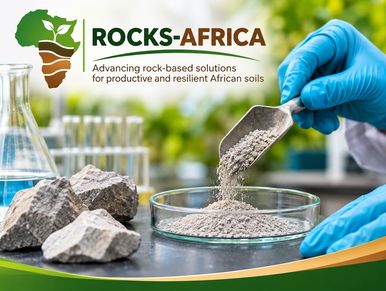
Investigating the interactions between rocks, soils and crops to strengthen the scientific evidence base for enhanced rock weathering in African agricultural systems.
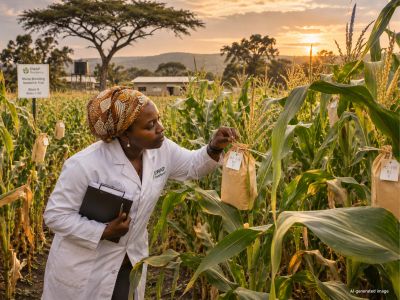
EWAP Research Fellowship

Supporting emerging researchers and interdisciplinary knowledge development in enhanced weathering across Africa.